How-to · 3 steps

How to buy a used car
with Monid.

Give this to your agent
$set up https://monid.ai/SKILL.md, then tell me if this used car is priced fairly and show the cost of each step

and let it take it from there.

›is this car priced fairly
#JobWhat came backCost
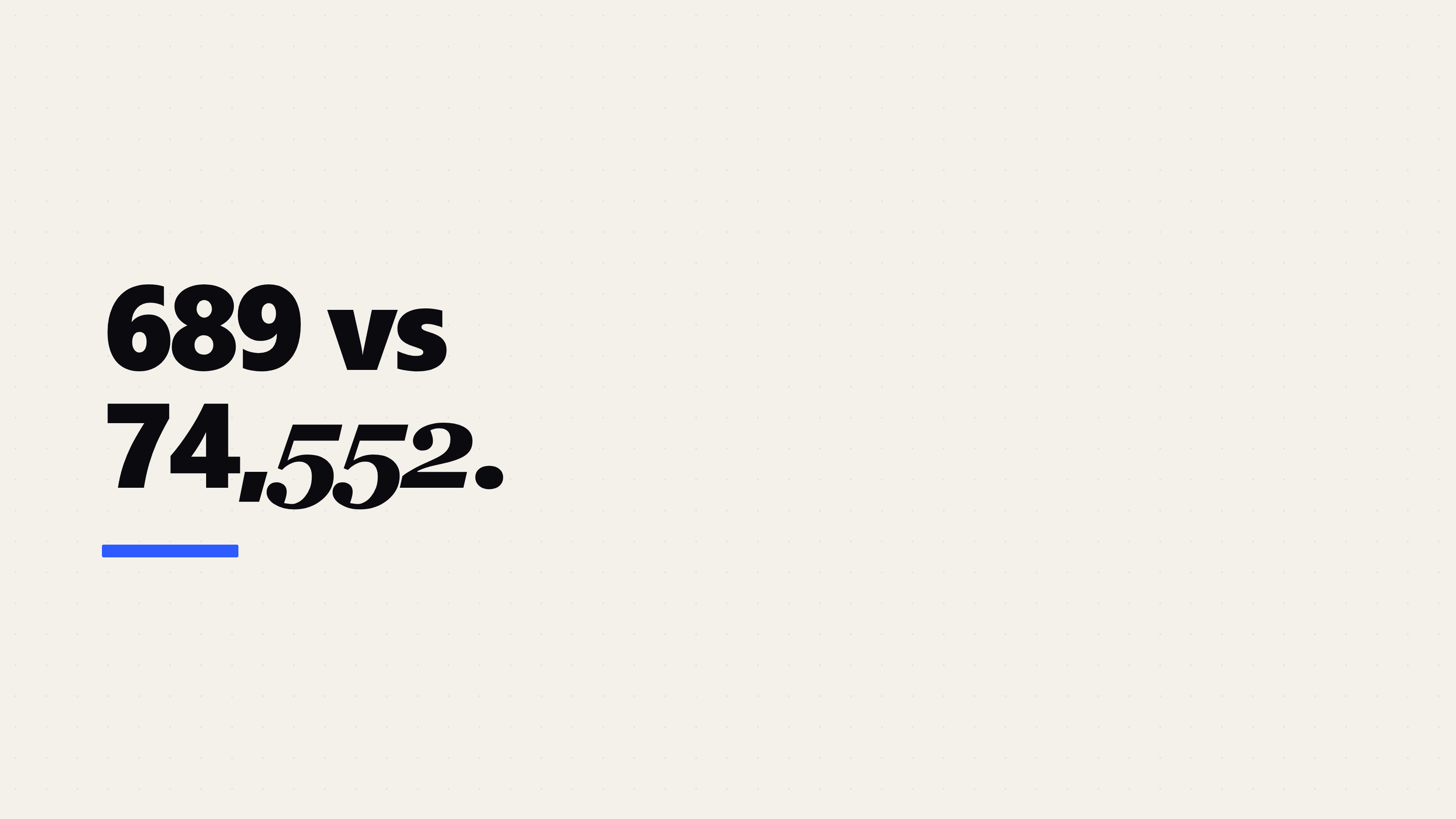
1Screen the market25 cars, history in each
2The valuation callidentical to the row you own
3The history callidentical to the row, one null
4Comps by hand6.1% under the median
5Clean-record comps16.0% under, and why
6A second opinion32 rows, labels not $
7The detail callless than the cheap row
8The ZIP it ignored21 cars, none in that state
9At auction$10,400, branded title
10Total26 runs, five providers
one RAV4 · 115 listings · 50 auction lots · $0.30agent running$0.30

Real run, 2026-09-25. Public listings, prices as captured.

Step 1

Set up Monid.

One line. It installs the CLI and asks for an API key from app.monid.ai. New accounts start with $1.00.

Say this to your agent
>set up https://monid.ai/SKILL.md
Step 2

Pick what you need. Say it in one sentence.

Click a job. Paste the sentence, fill in the brackets.

Screen the market near you

Say this to your agent
>search carfax on monid for a <year> <make> <model> within 50 miles of <zip> and give me price, mileage, trim, dealer and the accident summary for each. check the year on every row yourself: this provider's year filter leaks badly, about a third of the rows survived it on both markets we tried. take the service-record count from the number inside the service-history object, not from the similarly named field next to it, which is a boolean
What the agent runsdone
carfax /search_listings$0.01
cars.com /search$0.01
edmunds /search_inventory$0.01
bid.cars /search_listings$0.01
What came backone listing, one VIN · 2026-09-25
Same search, three providersrows returned
provider one115
provider two30
provider three21, wrong states
what one row holdsprice, mileage, trim, dealer, distance, owner count, accident summary, service-record count and the fees, so 25 cars cost $0.0004 each to shortlist
the filter leaksa search pinned to one model year reported 115 results of which 42 were that year, and pages three and four held none of it; on a second market 12 of 38 rows were the year asked for and the last page held none either
but it is this provider, not the aislethe second source's year filter was clean on a second market, 17 rows of 17 on-year, so do not tell a reader every retail search leaks
and the dishonest count is the other onethis provider's total was accurate on the second market, 38 reported and 38 reachable, while the second source returned 17 rows while reporting a total of 8
one field name is a trapthe service-record COUNT lives inside the service-history object; the field named for service records next to it is a boolean, so a reader who reaches for the obvious name gets true rather than a number
the ZIP that was ignoredanother provider accepted the ZIP, returned 21 cars from seven other states, computed the distances from somewhere else, and billed a 200 for it
coverage is the real difference115 rows against 30 against 21 for the same search, and the subject car existed in only one of the three
$0.0125 cars, $0.0004 each

Is the asking price fair

Say this to your agent
>do not buy the carfax value endpoint per VIN: on a second market it answered on three of three cars and every key in it was byte-identical to the search row we had already paid for, so it is the same duplicate trap as the history call one step down this page. build the comps from the search rows instead: same year, same trim, odometer within 15% of mine, then give me the median and where my car sits against it
What the agent runsdone
carfax /search_listings$0.01
carfax /get_carfax_value$0.01
cars.com /search$0.01
kbb /get_model_ratings · not run$0.01
What came backone listing, one VIN · 2026-09-25
One car against its compsUS dollars asked
the subject car$22,199
median of six comps$23,629
median, clean records only$26,427
dearest comp$27,950
it is a paid duplicateon a second market it answered on three of three VINs with no nulls at all, and all five keys were byte-identical to the search row on all three; at a cent a VIN that is $0.12 of new bytes on a twelve-car shortlist, which is zero
and it is the same defect the next sentence catchesthis page already tells readers not to buy the history call because it duplicates the search row. The valuation call does the same thing, and an earlier version of this page told readers to buy it first
what it looked like on the first marketit came back with the list price, a badge and a payment estimate that were already in the search row, plus two nulls. Both readings agree on the conclusion: nothing in it is new
what the comps say$1,430 under the median of six same-year, same-trim cars inside 15% of its odometer, which is 6.1%
and the number that matters$4,228 under the median of the three with nothing on the record, which is 16.0%, and that is the price of the words on the report
the second opinionsone other provider labels the deal rather than pricing it, sorting rows into good and great; the auction provider does put numbers on it, so the labels-only reading was too broad
$0.00maths over rows you already bought

Its history, without paying twice

Say this to your agent
>take the owner count, the accident summary, the service-record count and the use type out of the search row you already have. do not call the endpoint named for vehicle history: it returns the same thing with one extra field set to null
What the agent runsdone
carfax /search_listings$0.01
carfax /get_vehicle_history_summary$0.01
carfax /get_listing_detail$0.01
carfax /get_estimated_payment$0.01
carfax /get_vehicle_highlights$0.01
What came backone listing, one VIN · 2026-09-25
what arrives freethe owner count, the accident summary, the service-record count and whether it was personal or fleet use, on every row of a $0.01 search
the duplicatethe endpoint named for vehicle history diffed byte-for-byte against that row and differed by exactly one key
and that key is nulla boolean called noAccidents came back neither true nor false on a car whose own record says damage was reported
what the naive route costs$0.06 for all six VIN endpoints, of which $0.04 bought nothing; only the listing detail adds anything real
$0.00already in the search row

What the same car goes for at auction

Say this to your agent
>search bid.cars on monid for the same year and model, then tell me where each lot physically is: this endpoint has no location filter at all, so the comps come back from anywhere in the country. only some lots have settled, so read the final-bid field per row rather than trusting a sold filter. the shipping quote is on the per-lot detail call under a key named trucking, which is why a search for ship or freight finds nothing
What the agent runsdone
bid.cars /search_listings$0.01
bid.cars /get_listing_details$0.01
bid.cars /get_vehicle_by_vin$0.01
carfax /search_listings$0.01
What came backone listing, one VIN · 2026-09-25
Retail against the hammer, same model yearUS dollars
the retail listing$22,199
closest lot by odometer$10,400
median settled bid, 50 lots$8,900
the gap$11,799 between the retail asking price and the winning bid on a lot 1,550 miles further along the odometer, which is 2.13x
why it is not free moneythat lot carries a salvage certificate and front-end damage, runs and drives, and $425 to truck it home; the retail car carries none of that
a numeric estimate, but not the only onean auction lot carries a numeric low and high estimate. An earlier version of this page called it the sole numeric valuation in the aisle, which contradicts this page's own valuation sentence: the retail valuation is numeric too, on every row of a second market
no location filter at allon a second market 43 lots came back spread across about thirty states with two in the state asked for, so check where a lot is before you treat it as a comparable
the sold filter is inerta status of sold was accepted and ignored: only 7 of 43 lots carried a final bid, so read that field per row rather than trusting the filter
the filter that workedunlike the retail search, the auction year filter held on all 50 lots, and on a second market on all 43
$0.0250 lots, and one in depth

A second opinion, and what it costs

Say this to your agent
>cross-check the shortlist against cars.com on monid with its search endpoint, then diff any detail call against the row it came from before you pay for more of them: on both markets the detail traded the deal rating, the history summary, the photos and the dealer rating for a handful of spec fields. expect the two sources to disagree on price, not to confirm each other
What the agent runsdone
cars.com /search$0.01
cars.com /get_listing_details$0.03
carfax /search_listings$0.01
edmunds /search_inventory$0.01
What came backone listing, one VIN · 2026-09-25
the detail is thinneron both markets it came back with a null deal rating, a null history summary, no photos and no dealer rating; what it adds instead is a set of spec fields
and it is not deareran earlier version of this page called it three times the price of a search. On a second market it billed the same $0.03 the search did, so the argument is what it returns, not what it costs
they do not agree on priceon nine shared cars the price matched on two, with gaps running to $1,076. An earlier version said seven of eight matched to the dollar, which did not survive a second market
what does holdthe mileage matched on all nine and the trim disagreed on two, the same shape as the first market
and there is no row-limit parameterthe endpoint takes no row cap at all and returns 24 a page, so a request for a hundred is not clamped, it is ignored
$0.0132 rows, second source

What this aisle cannot tell you

Say this to your agent
>there is a recalls endpoint outside the car providers: find one that takes an agency and a make, model and year, and open the response to confirm it actually carries campaign numbers and remedies before you trust it. then tell me what is still missing: whether those recalls were remedied on THIS vin, the title brand on a non-auction car, and any private-party asking price
What the agent runsdone
carfax /get_listing_detail$0.01
bid.cars /get_vehicle_by_vin$0.01
kbb /get_model_ratings · not run$0.01
aaa-gas-prices /get_state_gas_prices · not run$0.01
What came backone listing, one VIN · 2026-09-25
there IS a recall check, and this page said there was nota recalls endpoint outside the car providers returned three real federal campaigns for a second market's car, with components and remedies, for about two cents on the first attempt
what it genuinely cannot doit takes a make, model and year rather than a VIN, so it tells you the campaigns that exist for the model and not whether this particular car has had them done
the decoy is sharper than a missing fieldsearching for recalls surfaces a provider whose name is literally the word recall and whose endpoint is a meeting recorder at fifty to sixty-five cents a call; open the response before you believe the name
no title or lien on a retail carthe title brand and the lien flag exist only for cars that went through a salvage auction; for a normal dealer listing, nothing here tells you
no private-party pricesall three retail providers are dealer inventory, and the private-sale floor sits outside this aisle entirely
the VIN boundarya VIN from one marketplace 422s on another; that is a corpus boundary rather than a broken endpoint, confirmed by a native VIN returning 200
$0.00know the holes before you buy
Step 3

Take the cheapest route with Monid.

One search row already holds the history, and on these cars the valuation call handed it back. Diff it once before you buy it per VIN; either way the comps are the work, and they cost nothing.

Screen the market · $0.01
Search listings$0.0125 cars, history in each
Second source$0.01check the price agrees
Worth a closer look? · cheapest first
The row you have$0.00
Listing detail$0.01
Auction comps$0.01
Listing detail$0.03
Comps by hand
Median of the comps$0.00
Against the hammer$0.01only if you would bid
Back to you
rowjudged bycost
1The row you have$0.01
2The row you have$0.01
3wrong year$0.01
4Listing detail$0.02
5Auction comps$0.03
5 of 5 rows$0.08
Say this to your agent
>tell me which of these cars is priced fairly, cheapest source first, and show the cost per car: <paste listing links>
“check the year per row”a search pinned to one year returned 115 rows of which 42 were that year
“do not buy the history call”it was byte-identical to the search row apart from one field set to null
“diff before you buy the second call”the valuation and the history endpoints both came back byte-identical to a search row already paid for
“open the response, not the name”a recall search surfaced a provider named recall whose endpoint records meetings at sixty-five cents a call
“check the response echoes back”one provider accepted a ZIP, ignored it, and billed a 200 for cars in seven other states

One key. 1,700+ tools.

On these cars, the endpoint that values one handed back the row we already bought.

25 cars, history attachedcarfax · $0.01 / call
A second opinion on pricecars.com · $0.01 to $0.03
What it went for at auctionbid.cars · $0.01 to $0.02
Dealer inventory and ratingsedmunds · $0.01 / call
Model ratings and lease dealskbb · $0.01 / call
What it costs to runaaa · $0.01 to $0.02

+ 1,700 more across 55 providers

Browse the catalog →