How-to · 3 steps

How to research the law
with Monid.

Give this to your agent
$set up https://monid.ai/SKILL.md, then find me the statute that governs <question> and show the cost of each step

and let it take it from there.

›find me the statute that governs this
#JobWhat came backCost
1The coverage map5,135,886 sections, 53 places
2Find the statutereal text, citation, gov link
3The default excerptno number in it at all
4Twenty-five statesif you ask; the default is five
5But not fiftyfour big states outside the cap
6Verify a citationresolved, with the text
7A fake citationresolved false, not invented
8Ask for historytoday's text, billed anyway
9The relevance scoreranked right once, inverted once
10Total25 billed runs
one settled question · 25 states for six cents · if you ask for 25agent running$0.9100

Real run, 2026-09-25. Retrieval only. Not legal advice.

Step 1

Set up Monid.

One line. It installs the CLI and asks for an API key from app.monid.ai. New accounts start with $1.00.

Say this to your agent
>set up https://monid.ai/SKILL.md
Step 2

Pick what you need. Say it in one sentence.

Click a job. Paste the sentence, fill in the brackets.

Find the statute that governs it

Say this to your agent
>find the statute that governs <question> in <state> with vaquill on monid, asking for the largest excerpt the endpoint allows, which is free. the DEFAULT excerpt is short enough to cut the number out of the answer, so before you quote anything, check the text you have actually contains the figure i asked about. give me the section number, the citation and the official link, quote the text rather than summarising it, and do not tell me what it means for anyone
What the agent runsdone
vaquill /search$0.04
vaquill /body$0.06 / result
vaquill /coverage$0.00
vaquill /sections$0.02 / section
What came backone settled question · 2026-09-25
What four cents returnschecked against the source
real statutory text, not a summarybyte-identical to the body
a citation on every result5 of 5
official government linkHTTP 200 when fetched
the default excerpt cuts the answer outon a second question in two states, the top hit's default excerpt contained no period at all: no six years in one state's section and no four years in the other's. An agent told to quote the text rather than summarise it then quotes a statute of limitations with no limitation in it, at full confidence, with a correct citation and a working government link attached
the fix is free and this page missed itthe excerpt length is a parameter, it costs nothing, and its ceiling is four thousand characters. At that ceiling the excerpt was byte-identical to the plain text the body endpoint returns, proved by string equality, so for any section under the cap the paid body call buys nothing
it is the real language either waywhat comes back is the statute rather than a paraphrase of it; the question is only whether you were given all of it
and it is citableevery result carries its citation and an external url pointing at the state legislature's own site, which returned HTTP 200 when we fetched it
the coverage is free to checkabout 5.1 million sections and 19.5 million passages across 53 jurisdictions, all flagged as having data, for $0.0000 before you spend anything. Those totals are live counters carrying their own measured-at stamp, so they move between runs
watch the default limitturning on inline bodies bills $0.06 per result on top of the $0.04, confirmed exactly at two limits, so the default limit of ten turns one search into $0.64
and the catalog understates it tenfoldthat tier is listed as a flat $0.06 per call. It is $0.06 per RESULT, so at the default limit the listing is out by a factor of ten
$0.04text, citation and a link

The same question in twenty-five states

Say this to your agent
>run <question> across the states with vaquill on monid, setting the limit to 25 explicitly: the default is 5 and the call costs the same either way, so leaving it unset throws away four fifths of what you paid for. then read the citations before you trust the set: these are the seed section's nearest neighbours by text similarity, not twenty-five answers to your question, and tell me which states are missing
What the agent runsdone
vaquill /cross-state$0.06
vaquill /resolve$0.02 / hit
vaquill /search$0.04
What came backone settled question · 2026-09-25
What one call coversUS jurisdictions
in the coverage map53
returned by one call25
large states outside it4
the number that sells it, if you ask for it$0.06 for twenty-five states in a single call. The default limit is five, and five costs the same $0.06, so the sentence has to name the limit or you pay full price for a fifth of the answer
they are neighbours, not answersthe set is ranked by similarity to the SEED section's text, so a seed whose title mentions one instrument pulls back that instrument's provisions from other states. On a second question the top similarity was 0.48 and most of the twenty-five were about something adjacent. The endpoint's own summary calls it a shortlist
the cap is hardtwenty-five with no cursor and no offset, both refused before a run exists, so it costs nothing to find out
and they are not missing dataone of the four resolved directly to its own section, so the state is covered; it simply lost the similarity ranking
so fifty states is not one callthe cheapest complete route we could construct is $1.14, and that figure is extrapolated rather than run
$0.0625 states, one call

Verify a citation someone gave you

Say this to your agent
>resolve <citation> with vaquill on monid and give me the text it actually points at. if it does not resolve, say so plainly rather than describing what a section with that number would probably say
What the agent runsdone
vaquill /resolve$0.02 / hit
vaquill /sections$0.02 / section
vaquill /body$0.06 / result
What came backone settled question · 2026-09-25
what it doestakes a citation and returns the section it points at, with the text, for two cents when it lands
and when it does notan invented section number and an invented case citation both came back as not resolved, rather than as a plausible fabrication, and both billed $0.0000
you pay per hitfive citations in, three resolved, three charged; the same is true of the sections endpoint, which found three of four ids and billed for three
the listed price is per itemthat endpoint is catalogued as tiered and bills per section actually returned, so batching saves round trips rather than money
$0.02per citation that resolves

The lookup this page will not teach you

Say this to your agent
>do not ask for a STATE statute as it stood on a past date: the as-of parameter goes in the query while the act id goes in the path, it is accepted, today's text comes back, nothing machine-readable marks it, and it bills. if you need historical state law, go to the state's own archive. federal law is different and does carry stored editions
What the agent runsdone
vaquill /search$0.04
vaquill /changes$0.00 when empty
vaquill /body$0.06 / result
What came backone settled question · 2026-09-25
what happensthe response reports the section existed, sets its note and out-of-coverage reason to null, and returns a body byte-identical to today's including the current figure, while the provider's own metadata says the section took effect after the date asked for
reproduced twice moreon two further states and years, with the current figure identical under strict equality both times, one of them including a subdivision added after the date requested
there IS a warning, and that is worsean engine field and a prose coverage note do appear. Neither is machine-readable, so a program cannot branch on them while a human skimming the response sees something that looks like due diligence
the only tell contradicts itselfa nested field says the source was live while the top-level source field on the same response says it came from change history
and the change log is thinasking that endpoint for a section amended in 2023 returned nothing, correctly billing $0.0000, so it cannot be used as a cross-check either
state law onlythe coverage endpoint documents annual stored editions for federal code and regulations, with a real edition path, so this warning is about state statutes and should not be read as covering everything here
$0.00the job is not to do it

Relevance is not confidence

Say this to your agent
>never filter these results on the relevance score. read the citation on each passage and check the text belongs to it: the score tells you how close the language is, not whether the source is the kind of law that answers your question
What the agent runsdone
vaquill /search$0.04
vaquill /resolve$0.02 / hit
vaquill /cited-byfederal only
What came backone settled question · 2026-09-25
Top relevance score, two questionsthe score the aisle returned
a question it cannot answer0.855
a question it answers correctly0.805
what went wrong oncea case-law question returned five state attorney-general opinions, and one excerpt was the Supreme Court's own language sitting under an attorney-general citation, scoring 0.855 against 0.805 for a question the aisle answers correctly
and did not go wrong the second timea different case-law question returned five correctly attributed statutes at a top score of 0.516, below the correct statute searches at 0.746 and 0.82, so a threshold would have worked there. The inversion is a hazard rather than a rule
which is why the instruction is about the citationa score that ranks correctly on one question and inverts on another is not something to tune a cut-off against; reading what the passage is and who issued it works on both
what to check insteadthat the passage's language belongs to the citation attached to it, which is a read of the text rather than a read of a number
the aisle is statutesreverse citation lookup exists for federal sections and not for state law, so treat case law as outside what this covers
$0.04the cost of finding out

The excerpt is not the section

Say this to your agent
>ask for the largest excerpt first, which is free and caps at four thousand characters: under that cap it is byte-identical to the paid body. only pay for the body when the section is longer than the cap. either way the truncation is silent, there is no flag anywhere in the object, and the word count still reports the whole section next to the shortened text
What the agent runsdone
vaquill /body$0.06 / result
vaquill /search$0.04
vaquill /sections$0.02 / section
What came backone settled question · 2026-09-25
What the excerpt gave against the bodycharacters of one section
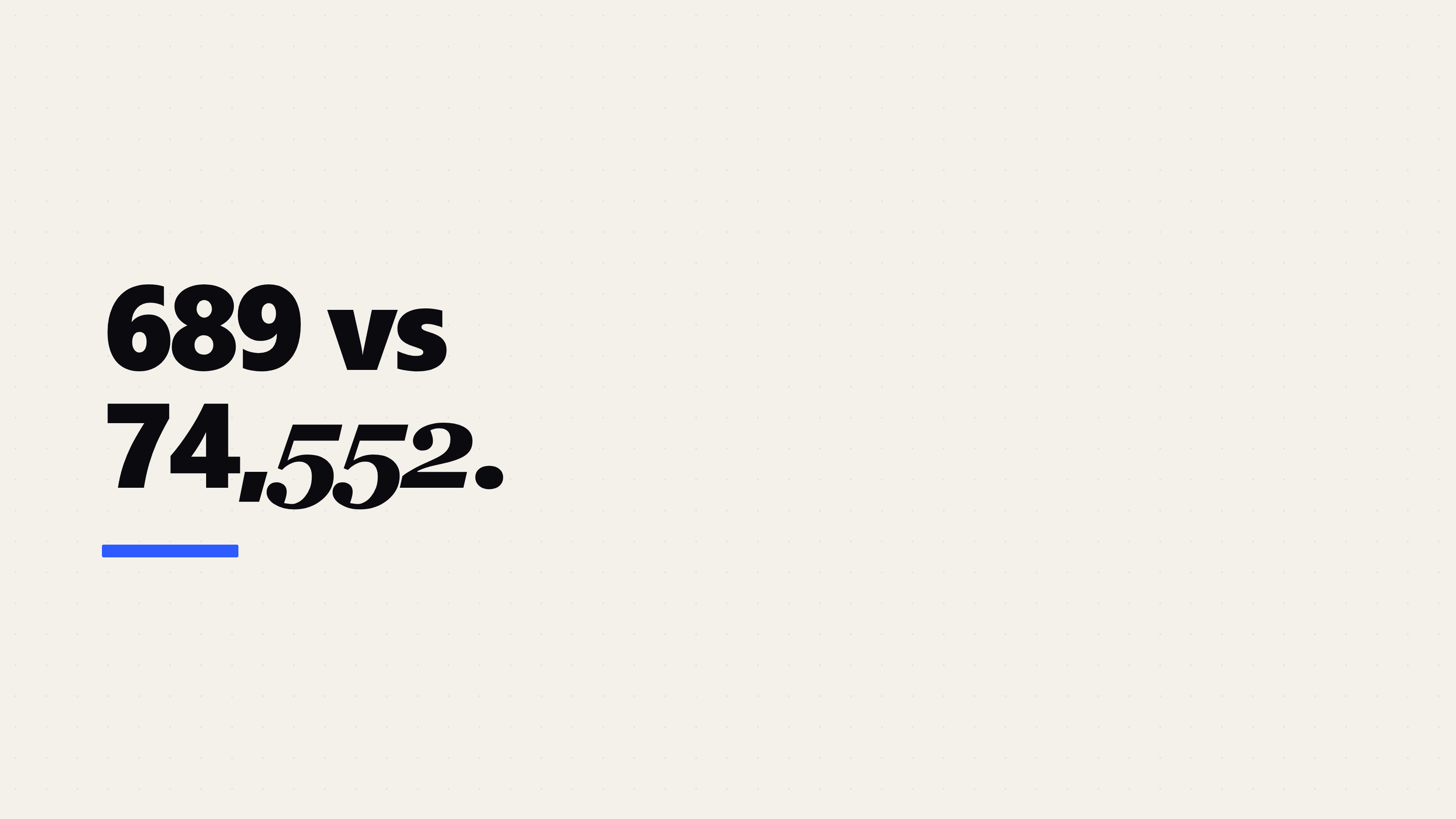
the full body4,197
the excerpt, asked for 4,0003,986
what is missing211 characters on this section, and 274 and 782 on two others, so the shortfall is whatever the section's length happens to make it
and it does not always end tidilythe neat ending on a full stop is one of three behaviours seen: two results began MID-SENTENCE with no marker at either end, which is harder to notice than a clean truncation
no flag, in any of themnothing anywhere in the object says the text was cut
and the count still says fullthe word count field reported the whole section's count next to the shortened text
two endpoints, two windowsthe same section came back with different truncation from the search and the sections routes, one of them starting part way through a subdivision
so quote from something wholefor a section under four thousand characters that is the free excerpt at its ceiling; above it, six cents is the price of quoting something you can stand behind. An earlier version of this page taught the paid route for both
$0.06the full text of one section
Step 3

Take the cheapest route with Monid.

Check the free coverage map, search for four cents, and ask for the largest excerpt, which is free and matches the paid body under four thousand characters. Pay for the body only above that.

Is it covered · $0.0000
Coverage map$0.0053 jurisdictions
Resolve a citation$0.02if you already have one
Find the text · cheapest first
Resolve it$0.02
Search one state$0.04
Across 25 states$0.06
Search with bodies$0.64
Pull the full body
The whole section$0.06
Check the citation fits$0.00read it, do not score it
Back to you
rowcited fromcost
1Search one state$0.1
2Resolve it$0.08
3not covered$0.00
4Across 25 states$0.16
5Search one state$0.1
5 of 5 rows$0.44
Say this to your agent
>find the statute that governs each of these and quote it with its citation, pulling the full body for any you will actually rely on: <paste questions>
“read the citation, not the score”the score ranked correctly on one question and inverted on another, so there is no cut-off to tune
“ask for the biggest excerpt”it is free, caps at 4,000 characters, and under that cap it is byte-identical to the paid body
“check the number is in the text”the default excerpt dropped the limitation period out of the top hit in both states tried
“never ask for a past date”today's text comes back with nothing marked, and it bills
“watch the default limit”inline bodies are $0.06 each rather than the flat $0.06 the catalog lists, so a default search with them on is $0.64

One key. 1,700+ tools.

Thirteen endpoints over five million sections, and the coverage map is free.

Search statutes, with citationsvaquill · $0.04 / search
Inline full text, per resultvaquill · +$0.06 each
One question, 25 statesvaquill · $0.06 / call
Resolve a citationvaquill · $0.02 / hit
Pull a section by idvaquill · $0.02 / section
Who cites thisvaquill · federal only
The coverage mapvaquill · $0.00 / call

+ 1,700 more across 55 providers

Browse the catalog →