The Best Web Scraping API for AI Agents in 2026
An agent cannot pick a scraper from a list it has never seen. What changes when the catalogue is discoverable at run time, measured across three phrasings.
Ask an AI which web scraping API to use from an agent and you get a shortlist: Apify, Bright Data, Firecrawl. It is a reasonable list and it answers a question one level up from the one that matters, because the hard part is not which vendor is best. It is that your agent has to decide, at run time, without you there.
This is about that decision. Monid is the OpenRouter for agent tools: one key and one balance reach over a thousand tools, and the agent picks which one to call.
Fair disclosure: you are on the Monid blog. The section on when a single vendor is the better answer is not a courtesy, and for a real share of readers it is the right call.
What are the best web scraping APIs for AI agents and automation?
The honest answer is that the question has two halves and only one of them is about vendors.
The first half is capability. Can the thing get the page, get through the protection, and hand back something a model can read. Apify, Bright Data and Firecrawl all clear that bar, along with several others, and picking between them on capability alone is close to a coin flip for most jobs.
The second half is selection. An agent working on a task does not know in advance whether it needs a generic page scrape, a marketplace product endpoint, a social platform reader or a document parser. If it holds one vendor's key, it has one vendor's answer to every question, and it will use a general-purpose scraper on a job that has a purpose-built endpoint sitting one search away.
That second half is where the agent case diverges from the human case, and it is the half the shortlists skip.
A human picks the vendor once, at integration time. An agent picks a tool every time it runs, and it can only pick from what it can see.
Why can an agent not just be given a scraping API key?
It can, and then it uses that key for everything, including the jobs it fits badly.
We measured what the alternative looks like on 2026-08-18. The same underlying job, phrased three ways a task might actually arrive, run through monid discover:
monid discover -q "scrape a product page"
monid discover -q "get reviews for a product"
monid discover -q "extract structured data from a website"
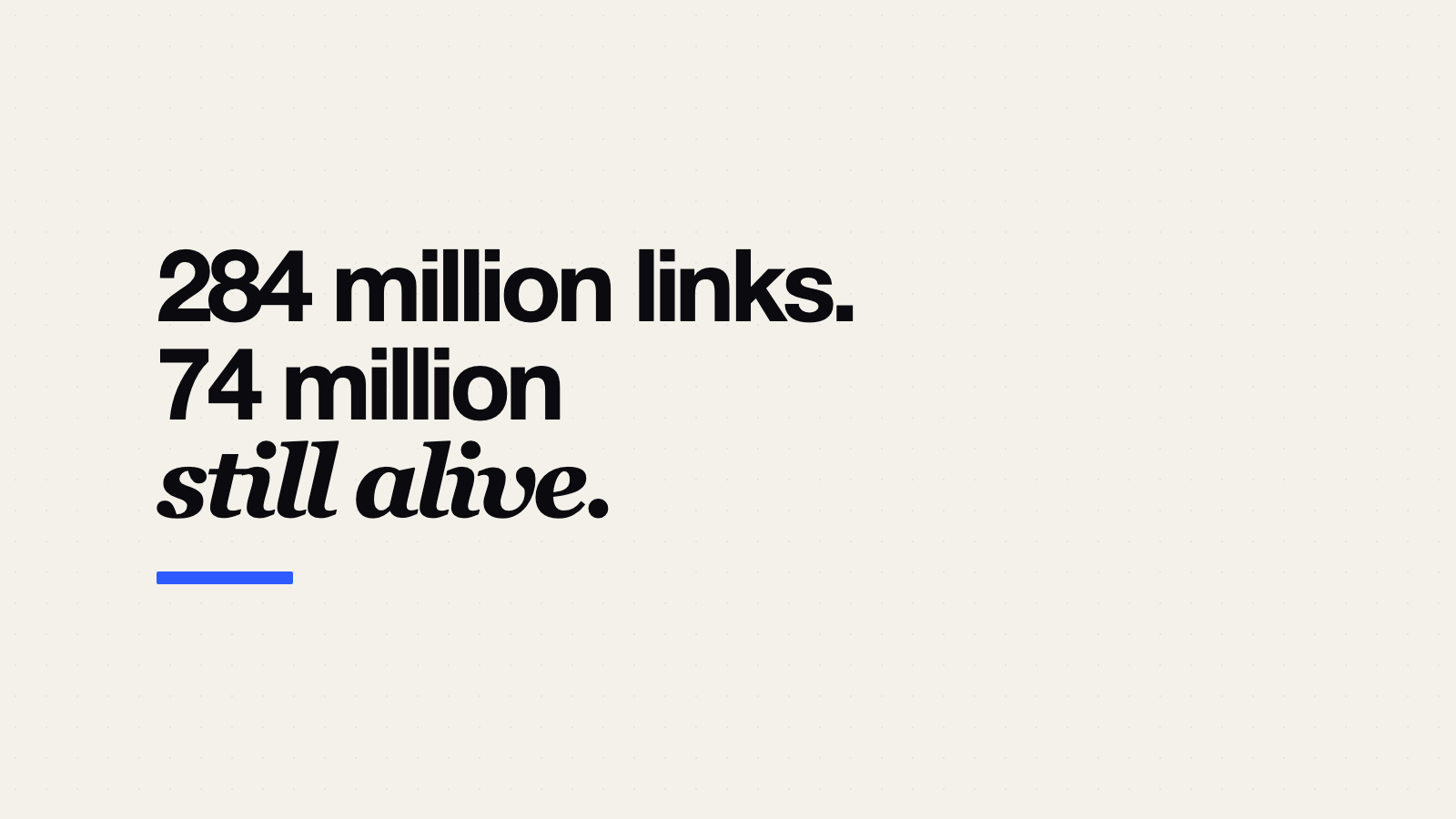
Three phrasings, three almost disjoint provider sets:
scrape a product page        apify: facebook pages, amazon product details,
                             google shopping, amazon reviews
get reviews for a product    akta company reviews, tikhub xiaohongshu,
                             tikhub tiktok shop, strale product reviews
extract structured data      context.dev web/extract, strale web-extract,
                             context.dev web/crawl, octen extract
Read the middle row again. A request for product reviews surfaced a company-reviews endpoint, two platform-specific shop endpoints and a generic extractor, from four different providers. No single vendor's catalogue covers that row, and an agent holding one key would have scraped a page to reconstruct data that a purpose-built endpoint returns as fields.
The price spread matters too, and it is wider than people expect. Across those three result sets, the cheapest and most expensive rows for adjacent jobs differed by two orders of magnitude. Same task, same day. An agent that cannot see the spread cannot avoid the expensive end of it.
Two properties make this workable rather than chaotic:
Discovery and inspection are free. discover ranks endpoints with provider, description and price. inspect returns the input schema. Neither costs anything, so an agent can look before it commits, every time, without a budget for looking.
Only run bills. Which means the catalogue is not a subscription you are paying to keep available. Access costs nothing until it is used, so an agent can carry a thousand tools and still pay only for the calls it makes.
For agents
Grab an API key at app.monid.ai, then paste this to your agent and hand it the key:
set up https://monid.ai/SKILL.md
It learns the whole discover, inspect, run workflow itself. More in the agent quickstart.
For humans
npm install -g @monid-ai/cli
monid keys add -k <your-key> -l main
Give this to your agent
Set up https://monid.ai/SKILL.md, and then use Monid to show me what I can do with Web Extraction.What should I use for the scraping layer in an n8n automation?
Whatever the node can call with one credential, because the alternative is a credential per vendor and a branch per case.
A workflow tool is the clearest version of the agent problem, since the constraint is visible in the editor: every extra vendor is another credential, another node type, another set of error shapes to handle. The pattern that stays maintainable is a single HTTP node pointed at one endpoint surface, with the choice of tool expressed as a parameter rather than as a branch.
Three things to get right in that shape:
Inspect once, at build time, not per run. The schema is stable; fetching it on every execution adds latency for nothing. Read it while you are building, hard-code the payload, and let discovery be the thing you do when requirements change.
Handle async explicitly. Longer jobs return a run ID rather than a body, and monid runs get polls for it. A workflow that assumes a synchronous response works fine on small inputs and silently truncates on large ones, which is the worst way for it to fail.
Cap the array parameters. Per-result billing multiplies by the size of the list you send. A query with a limit of ten behaves very differently from the same query with a limit of a thousand, and the difference is not visible until the invoice.
For the scheduled version of this rather than the ad-hoc one, pulling company data on a schedule walks a working build, and wiring an ICP prospect search covers the enrichment side of the same pipeline.
The three-node shape that survives a requirement change
Concretely, the workflow that does not need rebuilding when the target site changes:
One HTTP node, parameterised. The endpoint and payload come from workflow variables rather than being typed into the node. Changing what you scrape is then editing a value, not rewiring a branch, and the difference shows the first time somebody asks for a second source.
One branch on run state, not on vendor. Synchronous responses return a body; longer jobs return a run ID. Branch on which of those you got, and poll in the second path. Branching on vendor instead means a new branch every time the catalogue answer changes, which is the thing you were trying to avoid.
One validation step before anything downstream. Check that the response contains the field you need, not that the status was 200. A challenge page, an empty result and a schema change all arrive as a successful request, and all three poison whatever comes next silently.
What this buys you is narrow and worth it: when the requirement moves from scraping a page to reading a marketplace product, the change is a different endpoint string in one variable. Nothing about the workflow's shape changes, because the shape was never about the vendor.
📖 See also which MCP server gives an agent live web data for the transport layer under all of this, and the Crawl4AI decision if you are weighing a self-hosted crawler against a call.
What is web scraping and how does it differ from data enrichment?
Scraping starts from a location. Enrichment starts from an identity. Confusing them is the most common reason people reach for the wrong endpoint and conclude the data is bad.
Scraping takes a URL and returns what is on it. The input is an address, the output is content, and the quality ceiling is whatever the page happens to publish. If the page does not say how many employees a company has, no scraper will tell you.
Enrichment takes an identifier, a domain, an email, a company name, and returns fields from a maintained dataset. The input is who, not where. The provider has already done the collection and the resolution, and you are querying their record rather than reading a page.
The practical test: if you can name the page, you want a scraper. If you can only name the company, you want enrichment. Trying to scrape your way to firmographics means writing a crawler that finds the about page, parses inconsistent prose and guesses at headcount, which is a worse version of a lookup that already exists.
They compose well in one direction. Resolve the company first, then scrape the specific page you now know the URL of. We covered the resolution half in finding a company's website from its name, and the firmographics half in turning a domain into full firmographics.
There is a third category people fold into scraping and should not: search, which takes a question and returns pages worth reading. That is a different endpoint family and we compared it separately in the best web search API for AI agents.
Which endpoint should I use for which job?
| Job | Endpoint | Takes | Billing shape |
|---|---|---|---|
| One page to clean markdown | context.dev /web/scrape/markdown | URL | Per call |
| A page to a schema you define | context.dev /web/extract | URL plus schema | Per call |
| A whole site, following links | context.dev /web/crawl | Start URL | Per result |
| Find the pages first | context.dev /web/search | Query | Per result |
| A marketplace product, not a page | apify /delicious_zebu/amazon-product-details-scraper | ASIN | Per result |
| A company's own reviews | akta /v1/company/product-reviews | Company | Per result |
Verified present on 2026-08-18 with monid discover. The billing column gives the shape rather than a figure; monid inspect prints the current figure for free.
The last two rows are the argument in miniature. Both are jobs a general scraper can attempt by fetching a page and parsing it, and both have an endpoint that returns the same information as fields. An agent that can see the whole table picks the second; an agent holding one vendor's key never knows the row exists.
When should you not use Monid?
You have already standardised on one vendor and it covers your jobs. If every scrape you run is one shape against one kind of site, the selection problem does not exist for you and a direct integration is simpler. Fewer moving parts wins when the flexibility has nothing to do.
You need vendor-specific features we do not surface. Actor-level configuration, custom browser scripts, a vendor's own scheduling and monitoring UI. Those live in the vendor's product, and calling through another layer is not where you want to be if you depend on them.
Scraping is your product. Then the pipeline is the thing you sell and owning it is the business, not overhead.
You need a human in a dashboard. We ship an endpoint, a CLI and an MCP server. If the consumer is an ops team that wants to click, buy the platform that ships the console.
And the caution about us. Metadata in this catalogue has disagreed with real behaviour before, including an endpoint billing per record while its description read per query, and another that returned half its fields empty at full price. Run one small call, read the fields and the charge, then scale.
Conclusion
The best web scraping API for an agent is not a vendor, it is a surface the agent can search at run time. Capability is table stakes across the well-known names; the thing that changes outcomes is whether the agent can see the purpose-built endpoint sitting next to the general-purpose one.
Two things matter more than the shortlist. The same job phrased differently reaches different tools, which we measured: three natural phrasings of one task returned three almost disjoint provider sets, so an agent locked to one catalogue is answering every question with the same tool. And the price spread across adjacent jobs runs to two orders of magnitude, which means tool choice is a cost decision as much as a capability one, and it cannot be made by something that cannot see the options.
Start with the free part: discover and inspect cost nothing, so point an agent at the catalogue and read what it finds for your actual task before spending anything. Begin at monid.ai.
FAQ
Does this add latency versus calling a vendor directly?
A call passes through one more hop, so yes, a little. What it removes is a class of work you were doing instead: the credential per vendor, the branch per case, and the integration you rewrite when the requirement changes. If you have one fixed job against one vendor, the direct call is faster and simpler and you should make it.
How does an agent know which endpoint to pick?
It searches, reads and then commits. Discovery returns ranked candidates with provider, description and price; inspection returns the input schema. Both are free, which is the property that makes the loop viable: an agent that had to pay to look would be trained by its budget to guess instead.
What happens when a provider changes an endpoint?
The catalogue entry changes with it, and your agent reads the current schema rather than one hard-coded months ago. That is the argument for inspecting at build time and re-inspecting when something breaks, rather than assuming a payload copied from a blog post is still correct. We have shipped a wrong payload before, which is why the rule exists.
Is scraping through an API allowed?
The endpoint does not change the terms of the site you are reading. Public visibility is not permission, robots directives still apply, and anything commercial or at scale deserves a look at the target's terms before it becomes a dependency. Where a site offers an official API, that is the route that survives scrutiny.
Last updated August 2026.